Frozen Feast
- 4.5
- Rating
- 10.00K
- Installs
- Free
- Price

 Analysis by App-foxy
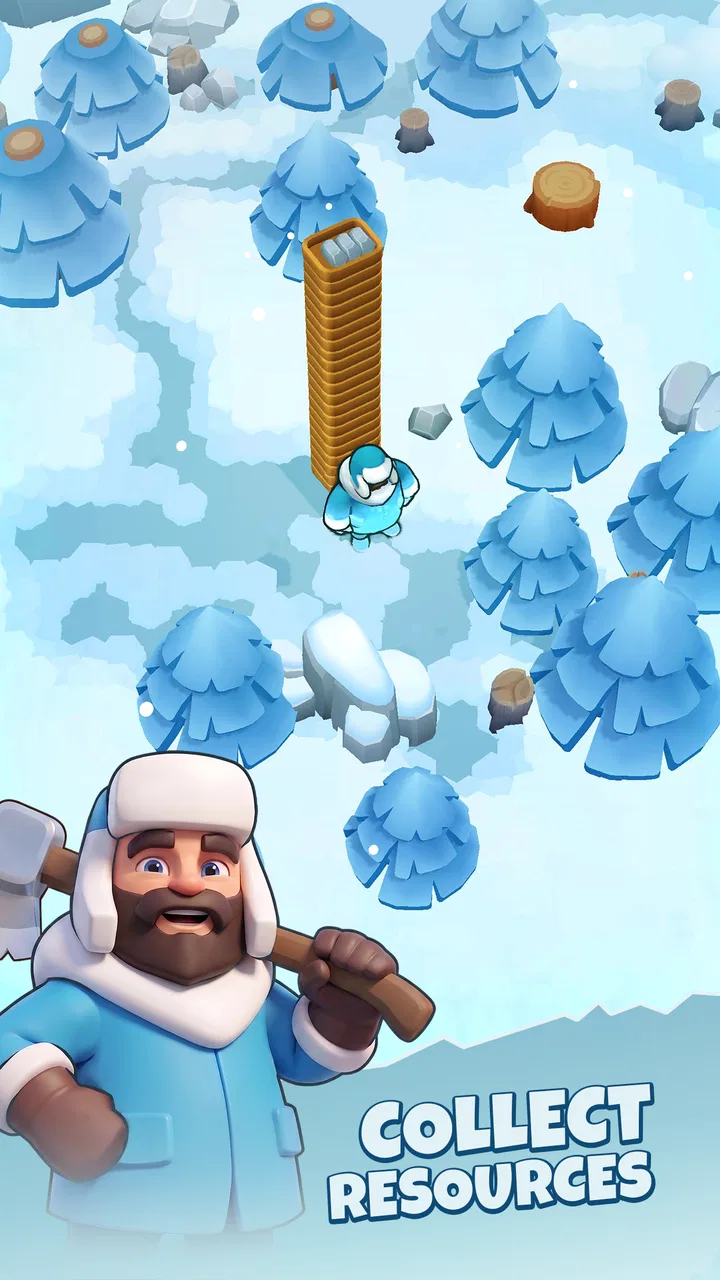
Frozen Feast is a role-playing game from Feavy Games that puts a simple survival idea at the center: collect what you need and turn it into a shelter that feels like your own. I found the concept easy to understand within moments, but the appeal is less about a complicated story and more about the steady satisfaction of making a harsh setting manageable. It is free to play, rated for Everyone, and currently available in version 1.0.3, which makes it approachable for younger players as well as adults who want a lighter survival-themed game.
My first impression was that this is best viewed as a calm, collection-focused adventure rather than a demanding role-playing epic. The store summary points toward gathering materials and building a dream shelter, and that focus shapes the whole experience. You are not approaching it as a character-stat spreadsheet or a long dialogue-heavy quest. Instead, the pleasure comes from deciding what to gather, what to improve first, and how much effort you want to put into making your shelter feel complete.
How Frozen Feast feels when you play
I found that the best way to judge Frozen Feast is to notice how its steady pace handles the small gaps in a day, rather than expecting a burst of action every time I open it. A short session can still have a purpose if I decide what shelter goal I’m working toward before I start collecting. That makes the next question less about speed alone and more about how the game feels when I settle in for longer stretches.
You May Also Like

 AccuWeather: Weather Radar
AccuWeather Review: A Quick, Clear Forecast for Everyday Decisions
For everyday plans, the best forecast is the one you can understand quickly. AccuWeather makes rain timing, radar, and local conditions easy to act on, with a few trade-offs.

 Hill Climb Racing
Why Hill Climb Racing Still Turns Crashes Into One More Run
A tiny car, a bumpy hill and one more upgrade: Hill Climb Racing keeps resurfacing because its simple chaos makes every near-miss feel personal.

 AliExpress - Shopping App
AliExpress Makes Global Shopping Feel Personal, but Shoppers Bear the Risk
AliExpress turns a global marketplace into a pocket-sized discovery engine. Its reach is useful, its shopping loop compelling, and its trade-offs easy to miss.

 Lords Mobile: Kingdom Wars
Lords Mobile Is a Kingdom-Building Routine, Not a Quick Match
A case-by-case verdict on the building, battles, device demands, and social commitments that make Lords Mobile rewarding for some players and exhausting for others.

 PDF Scanner app - TapScanner
TapScanner Makes Paperwork Easier to Capture, Check, and Share
TapScanner makes scanning with a phone feel less like a rescue operation and more like a dependable step in getting work done. Its capture tools are useful, though not flawless.

 Block Blast!
 Shows How Much a Puzzle Game Can Leave Out
A quiet grid game shows why puzzle players increasingly value instant clarity, repeatable skill and low-pressure play—and where the genre still needs to catch up.
More From Our News Desk
View All News


A gentle survival loop with a clear reason to keep going
The core loop is easy to explain: explore the available opportunities, collect materials, and use them to improve your shelter. That simplicity is one of the game’s strongest qualities. I never felt lost about the broad purpose of my next session. Even when I only had a short amount of time, gathering a few useful resources still felt like progress because the shelter gave those materials a visible destination.
That structure also makes the game more welcoming than many role-playing titles that begin with several systems at once. Here, the shelter acts as an anchor. Rather than asking you to remember a large cast, multiple currencies, and several unrelated objectives immediately, the game gives you a practical goal that is easy to return to. For a player who enjoys gradual improvement, that can be more satisfying than chasing abstract experience points.
I especially liked the way the shelter changes the meaning of collection. Gathering is not just a repetitive activity when the result is connected to a place you are building. Every material has a question attached to it: should I use this toward a visible improvement now, or save it for something that may be more useful later? That small decision is where the role-playing element becomes personal.
What to do when you only have a few minutes
A realistic use case is a short evening break. If I have only enough time for a small session, I can focus on one practical target instead of trying to complete a broad mission. I might gather materials for a single shelter improvement, stop once that goal is reached, and return later without feeling that I abandoned a complicated chain of events. That makes Frozen Feast a better fit for interrupted play than games that demand long uninterrupted battles or extended story scenes.
For a longer session, the same loop can become more deliberate. I can plan a route around the materials I need, avoid spending everything immediately, and work toward a larger shelter goal. The useful habit here is to set a purpose before collecting. Without one, gathering can start to feel like wandering. With one, even a modest haul has a clear value.
My practical advice is to choose a near-term construction objective and treat everything else as secondary. This prevents the common problem of collecting endlessly without seeing a meaningful payoff. It also helps reveal whether the game’s pace suits you: if you enjoy turning small piles of resources into visible progress, the loop should feel rewarding; if you need constant combat or dramatic story developments, it may feel too restrained.
Where the pressure comes from
Frozen Feast is built around a cold, survival-flavored setting, but I would not approach it expecting the same intensity as a harsh survival simulator. Its pressure appears to come primarily from deciding how to manage progress and materials rather than from a relentlessly punishing experience. That distinction matters. The game can create a sense of responsibility around your shelter without necessarily becoming stressful in the way a game with constant danger would be.
The trade-off is that the experience depends heavily on whether you enjoy gradual goals. There is no reason to rush a shelter project if your preferred style is fast action. On the other hand, players who like watching a rough starting point become more comfortable may find the slower rhythm relaxing. I would describe the mood as purposeful rather than frantic.
One useful approach is to separate “progress materials” from “emergency materials” in your own planning, even if the game does not present the distinction in those exact terms. Spend only what directly advances your current objective, and avoid treating every available resource as something that must be used immediately. This kind of restraint makes the building loop feel more strategic and reduces the sense that progress is being wasted.
Building a shelter instead of chasing a character build
Many role-playing games make the player’s character the main project. You improve abilities, collect equipment, and optimize a build. Frozen Feast shifts that attention toward the shelter. That is a meaningful difference, not just a cosmetic change. The thing I am most interested in improving is the place I am creating, so the reward is environmental and practical rather than only numerical.
This can make the game easier to understand for someone who does not normally enjoy traditional role-playing systems. A player does not need to memorize a complicated build guide to appreciate the basic objective. At the same time, experienced role-playing fans may miss the deeper character customization or combat planning they expect from the category. Frozen Feast works best when shelter development itself is enough motivation.
The shelter also gives the game a personal quality. Two players may value different improvements or organize their priorities differently, even while following the same broad loop. I found that more engaging than simply moving from one identical reward screen to the next. The limitation is that the experience remains tied to how much variety the available building goals provide. If you want a large number of distinct play styles, a more system-heavy role-playing game may offer greater long-term depth.
Fairness, spending, and what I would check before committing
Frozen Feast is free to download, which removes the biggest barrier to trying its basic experience. I could begin without treating the game as a financial commitment. That is useful for a title whose appeal depends on a personal preference for gathering and shelter improvement; you can test the rhythm yourself instead of deciding from a description alone.
When spending is important to you, I would still approach the game carefully and look at the purchase information shown on your device before making any decision. I would not assume that free access automatically means every part of progression is equally generous, nor would I assume the opposite. The fair conclusion I can draw is narrower: the entry price is free, while the value of any optional spending should be judged by whether it improves convenience without undermining the satisfaction of gathering materials yourself.
My own rule would be simple: play long enough to understand whether the shelter loop is enjoyable without rushing progress. If you already like the basic rhythm, optional purchases can be considered as convenience rather than a substitute for enjoyment. If the collecting feels repetitive from the beginning, spending is unlikely to solve the underlying mismatch.
That is also why I would not recommend treating the game as a competitive investment. Its central appeal is personal progression and shelter creation. Players looking for a fair contest based on skill, ranking, or direct competition should choose a game designed around those priorities instead. Frozen Feast is more naturally judged by how satisfying its own progression feels.
How it compares with familiar alternatives
Compared with a conventional role-playing game, Frozen Feast appears less interested in elaborate combat systems and more interested in the relationship between gathering and building. If your favorite part of an RPG is defeating enemies, collecting powerful equipment, and refining a character class, another title in the category will probably suit you better. Frozen Feast makes more sense for someone who likes the preparation side of adventure: finding useful materials and turning them into a safer, more personal base.
Compared with a pure building game, it has a stronger survival-flavored identity. The shelter is not simply a blank creative canvas detached from the rest of play. The act of gathering gives construction a reason to exist. That can be more motivating than freeform building for players who want objectives, but less satisfying for players who want complete creative freedom without resource pressure.
It also differs from fast mobile games that reward constant tapping and rapid sessions with immediate visual feedback. Frozen Feast asks for patience. The reward is cumulative, and the best moments come from seeing a longer plan take shape. I would choose it over a more aggressive alternative when I want a quieter game, but I would not choose it when I am looking for instant action during a very short break.
Who should play it, and who should skip it
I would recommend Frozen Feast to players who enjoy resource collection, shelter improvement, and a relaxed form of role-playing progression. It is particularly suitable for someone who likes having a clear long-term project but does not want to manage a complicated character build. The Everyone age rating also makes the overall presentation approachable for a broad audience, though individual preferences about repetition and pace still matter more than the age label.
It may also suit families looking for a game that is easy to explain. “Gather useful materials and improve your shelter” is a straightforward objective, and a younger player can understand the satisfaction of making a home better over time. I would still encourage parents to review the purchase controls on the device if children will play independently, because free games deserve the same spending awareness as any other downloadable title.
I would skip it if you need a deep narrative, highly demanding combat, or a large competitive community. I would also look elsewhere if you dislike repeating collection tasks even when they lead to visible improvements. The game’s premise is focused, and that focus is both its identity and its main limitation. It does not appear designed to be all things to every type of RPG player.
What the current release tells me
The current version is 1.0.3, so I would treat the game as an experience that may still be developing rather than as a massive, established role-playing platform. That does not make it a poor choice. In fact, a focused early release can be appealing when you want a clean central idea instead of years of accumulated systems. It does mean I would keep expectations realistic about breadth and look for updates if long-term variety is especially important to me.
Feavy Games is the developer behind the project, and the game has already attracted a 4.5 average from around 2.4 thousand ratings, with more than 10 thousand installs. Those figures suggest that the basic concept has found an audience, but they do not replace personal testing. A player can appreciate the shelter loop while another finds the same pacing too slow. I see the reception as a useful signal of interest, not a guarantee that every player will enjoy the same rhythm.
The release date is May 26, 2026, which also gives the game a relatively fresh identity. For me, that makes the version number and the game’s focused design worth considering together. Someone who enjoys following a title as it grows may find that appealing. Someone who wants a fully mature game with a wide range of polished systems may prefer to wait or choose a longer-established alternative.
My trust verdict after weighing the trade-offs
The strongest reason to try Frozen Feast is that its goal is concrete and easy to feel. Materials do not exist only as abstract rewards; they support the shelter you are trying to create. That connection gives ordinary collection a sense of purpose and makes short sessions worthwhile when I set a specific target before playing.
The main caution is equally clear: the game’s value depends on your tolerance for a steady, focused loop. It is not the right recommendation for someone who wants constant novelty, complex combat, or a competitive challenge. I would also avoid spending impulsively before deciding whether the free progression itself is enjoyable. A fair test is to play at your natural pace, notice how often the shelter gives you a satisfying reason to continue, and then decide whether the experience deserves more of your time.
Overall, I see Frozen Feast as a promising choice for relaxed role-playing sessions built around gathering and shelter development. It is free, approachable, and specific about the kind of satisfaction it wants to provide. I would recommend giving it a try if the idea of turning scarce materials into a personal refuge sounds more appealing than fighting for rankings or optimizing a complicated hero. If you enjoy progress you can see and touch inside the game world, this is where Frozen Feast makes its best case.
FAQs for Frozen Feast
01What is Frozen Feast, and how does the game work?
Frozen Feast is a casual food-themed game centered on preparing, serving, or managing frozen treats and meals, depending on the available game mode. After installing it, players generally progress through short levels or tasks, complete customer orders, unlock new ingredients or equipment, and improve their performance over time. Its simple controls make it approachable for casual players, while timed objectives and upgrades add a little extra challenge.
02Is Frozen Feast free to download and play?
Frozen Feast can typically be downloaded without an upfront purchase, allowing users to try the main gameplay at no cost. However, free-to-play games may include optional in-app purchases for coins, boosters, cosmetics, extra lives, or faster progress. Advertising may also appear between stages or during certain actions. Before downloading, check the current store listing because pricing, advertisements, and available purchases can vary by platform and region.
03Does Frozen Feast require an internet connection?
The basic gameplay in Frozen Feast may work without a constant internet connection, which is convenient when traveling or playing with limited data. Nevertheless, some features can depend on online access, including advertisements, cloud saving, leaderboards, special events, updates, and in-app purchases. If offline play is important to you, test the game after disabling mobile data and Wi-Fi, since functionality can differ between versions.
04Is Frozen Feast suitable for children?
Frozen Feast is generally easy to understand because it uses colorful visuals, straightforward objectives, and simple touch controls. Even so, parents should review the age rating and privacy information before allowing a child to play. The game may contain advertisements, optional purchases, or links to external pages. It is also a good idea to enable purchase restrictions and check whether the content matches the child’s age and maturity.
05What devices are compatible with Frozen Feast, and what should I check before installing it?
Compatibility depends on the version available for Android or iOS, as well as the developer’s current requirements. Before installing Frozen Feast, review the supported operating-system version, required storage space, and any listed permissions in the official app store. Keeping enough free storage and using an updated device can help prevent crashes or slow performance. Downloading from the official Google Play Store or Apple App Store is recommended for safety.
Pros
- Fun match-3 puzzles with colorful frozen-food themes.
- Short levels make it easy to play during quick breaks.
- Simple controls are suitable for players of all ages.
- Frequent goals provide a clear sense of progression.
- Cheerful visuals and sound effects create a lighthearted atmosphere.
Cons
- Some levels may feel repetitive after extended play sessions.
- Difficulty can increase sharply in later stages.
- Power-ups may be limited without careful resource management.
- Ads can interrupt the experience between levels.
- An internet connection may be needed for certain features.

Frozen Feast
Gallery